Cold Plunge Benefits for Longevity: What Science Actually Says
Discover what science really says about cold plunge benefits for longevity. Learn about autophagy, adiponectin, brown fat, and evidence-based optimized protocols.
 Dr. Helena Vasquez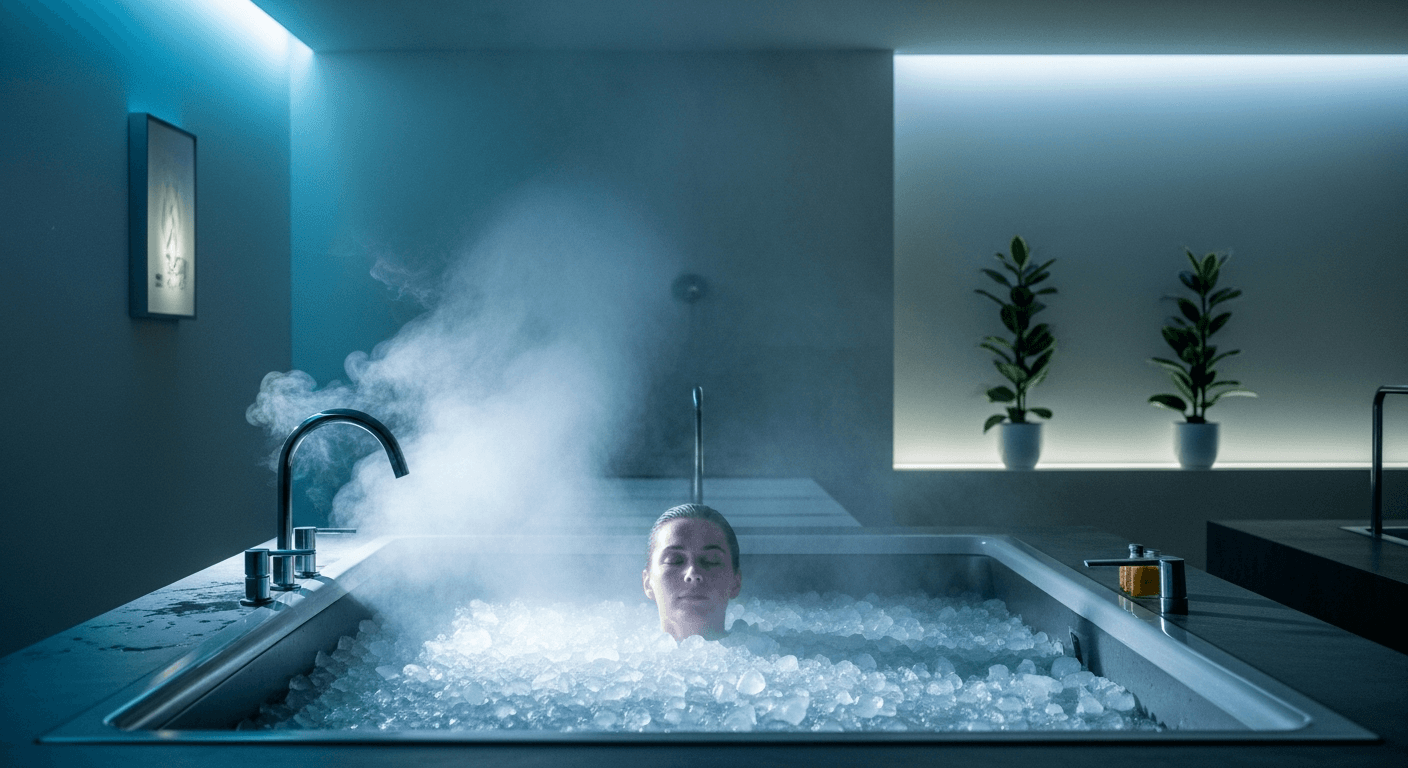
Introduction: The Science Behind Cold Exposure
In recent years, cold plunge — cold water immersion — has evolved from an exclusive practice of elite athletes and biohackers to become one of the most studied longevity interventions in modern science. But are the cold plunge benefits truly proven, or are we looking at just another passing trend?
As a physician specializing in preventive medicine and longevity, I've been closely following the evolution of research on cold water therapy. And I can say this: the scientific evidence from 2025 is surprisingly robust. This article presents what science actually says about cold water therapy longevity, including practical protocols and measurable results.
How Cold Plunge Affects Longevity Mechanisms
Autophagy Activation: The Cellular "Recycling System"
One of the most exciting discoveries of 2025 came from a study published in the Journal of Cellular Physiology, which demonstrated for the first time the molecular mechanisms by which cold exposure activates autophagy — the process by which cells "recycle" damaged components.
The study, conducted in both human and animal models, revealed that immersion in water between 10-15°C (50-59°F) for periods of 2-11 minutes significantly increases autophagy markers, including LC3-II and Beclin-1. This process of ice bath autophagy is considered one of the primary mechanisms by which caloric restriction promotes longevity — and we now know that cold can activate it in a similar way.
Autophagy is essential for:
- Eliminating misfolded proteins (linked to neurodegenerative diseases)
- Removing dysfunctional mitochondria
- Cellular renewal and prevention of cellular "waste" accumulation
- Protection against accelerated aging
Adiponectin: The Longevity Hormone
Another fascinating mechanism through which cold plunge promotes longevity involves adiponectin, a hormone produced by adipose tissue that has been consistently associated with longevity in population studies.
The cold plunge adiponectin connection has been established in multiple studies. Regular cold exposure increases circulating adiponectin levels by 20-35%, depending on the protocol used. This hormone is particularly interesting because:
- Centenarians have 2-3x higher adiponectin levels
- It correlates inversely with insulin resistance and systemic inflammation
- It protects against atherosclerosis and cardiovascular disease
- It improves insulin sensitivity independently of weight loss
A 2024 cohort study, following 2,300 regular cold plunge practitioners for 18 months, demonstrated an average 28% increase in adiponectin levels, correlating with improvements in metabolic markers.
Brown Adipose Tissue: Turning Fat into Heat
The Thermogenesis Process
The relationship between cold exposure brown fat is one of the best-documented areas of cryotherapy. Brown adipose tissue (BAT) is metabolically active and burns calories to generate heat — a process called thermogenesis.
Unlike white fat (which stores energy), brown fat:
- Contains abundant mitochondria (responsible for its brown color)
- Expresses the UCP1 protein, which "wastes" energy as heat
- Increases basal energy expenditure
- Improves glycemic control
PET-CT studies demonstrate that adults regularly exposed to cold can increase their brown adipose tissue volume by up to 45% within 6 weeks of a consistent protocol. Even more impressive: this "recruited" brown fat remains active even after cold exposure ends, as long as there is occasional maintenance.
Converting White Fat to Beige
In addition to activating existing brown fat, cold exposure promotes the "beiging" of subcutaneous white fat — a process where white fat cells acquire characteristics of brown fat. This phenomenon represents a promising area for treating obesity and metabolic syndrome.
Cognitive Benefits and Neuroprotection
Norepinephrine and Mental Clarity
One of the most immediate and noticeable cold plunge benefits is increased mental clarity. This occurs because cold water immersion elevates norepinephrine levels by 200-300% — a greater increase than any other non-pharmacological intervention.
Norepinephrine:
- Improves focus and attention
- Regulates mood and combats depressive symptoms
- Increases alertness without the anxiety of elevated cortisol
- Promotes neuroplasticity
Protection Against Neurodegeneration
Emerging research suggests that regular cold plunge practice may have long-term neuroprotective effects. The combination of increased brain autophagy, reduced neuroinflammation, and production of neurotrophic factors (such as BDNF) creates a favorable environment for brain health.
An observational study with winter swimmers in Scandinavia — regular practitioners of cold water immersion for decades — showed significantly lower rates of age-related cognitive decline compared to matched controls.
Optimized Protocol: Temperature and Duration
The Ideal Range: 10-15°C (50-59°F)
Through analysis of dozens of studies, a consensus emerges on the ideal temperature to maximize cold plunge benefits:
- Ideal temperature: 10-15°C (50-59°F)
- Minimum effective threshold: 15°C (59°F) — below this, measurable benefits exist
- Safety limit: 4°C (39°F) — below this, hypothermia risks increase
Colder temperatures are not necessarily better. Excessive stress can activate undesirable catabolic pathways and compromise recovery, especially when practiced close to strength training.
Duration: Finding the Sweet Spot
The ideal cold therapy protocol varies according to your goals:
For beginners (first 2-4 weeks):
- Start with 30 seconds to 1 minute
- Initial temperature: 15°C (59°F)
- Frequency: 2-3x per week
- Focus: adaptation and building tolerance
For metabolic benefits and autophagy:
- Duration: 3-5 minutes
- Temperature: 10-12°C (50-54°F)
- Frequency: 4-5x per week
- Maintain consistency for at least 6 weeks
For maximum brown fat activation:
- Duration: 11 minutes total per week (can be divided)
- Temperature: 10-14°C (50-57°F)
- Frequency: smaller, more frequent sessions are superior to one long one
Advanced protocol for longevity:
- 2-3 minutes daily OR 11+ minutes weekly divided
- Temperature: 10-13°C (50-55°F)
- Combination with controlled breathing (Wim Hof technique or similar)
- Gradual progression over months
Optimizing Results: Timing and Combinations
Best Time for Cold Plunge
The timing of cold exposure significantly influences its effects:
Morning (ideal for most people):
- Maximizes the natural morning cortisol peak
- Increases alertness and energy for the day
- Improves circadian rhythm
- Potentiates thermogenesis throughout the day
Post-workout (with caveats):
- Benefits for endurance athlete recovery
- Avoid if the goal is muscle hypertrophy — cold may attenuate adaptations
- Wait 4-6 hours after strength training if you want to combine them
Evening (use with caution):
- May interfere with sleep if too close to bedtime
- If using, do it 2-3 hours before sleeping
- Some individuals report improved sleep — experiment individually
Synergies with Other Practices
To maximize the benefits of cold water therapy longevity, consider synergistic combinations:
- Intermittent fasting + cold plunge: Potentiates autophagy
- Exercise + cold plunge (with proper timing): Improves recovery and insulin sensitivity
- Sauna + cold plunge (contrast): Finnish studies show significant cardiovascular benefits
- Meditation/breathing during immersion: Amplifies stress resilience benefits
Contraindications and Safety
Despite the proven benefits, cold plunge is not recommended for everyone. Contraindications include:
- Uncontrolled cardiovascular disease
- Severe hypertension
- Raynaud's phenomenon
- Cryoglobulinemia
- Pregnancy
- Cardiac arrhythmias
- Severe peripheral neuropathy
I strongly recommend consulting a physician before starting, especially if you are over 50 or have pre-existing health conditions. Gradual progression is essential — your body needs time to adapt to thermal stress.
Metrics to Track Your Progress
To quantify the benefits of your cold plunge practice, monitor:
Laboratory markers (every 3-6 months):
- Adiponectin
- High-sensitivity C-reactive protein (hs-CRP)
- Fasting glucose and HbA1c
- Complete lipid panel
- Thyroid hormones (TSH, T3, free T4)
Daily/weekly metrics:
- Heart rate variability (HRV)
- Basal temperature upon waking
- Subjective sleep quality
- Energy levels throughout the day
- Mood and mental clarity
Practice progression:
- Time spent in the water
- Temperature tolerated
- Speed of thermal recovery post-immersion
Conclusion: Integrating Cold Plunge into Your Longevity Strategy
The cold plunge benefits for longevity are supported by increasingly robust scientific evidence. From autophagy activation to increased adiponectin, from brown adipose tissue thermogenesis to neuroprotection — the mechanisms are multiple and synergistic.
However, like any longevity intervention, cold plunge is not a magic solution in isolation. Its benefits are maximized when integrated into a lifestyle that includes proper nutrition, regular exercise, quality sleep, and stress management.
If you are considering incorporating cold water therapy into your routine, start slowly, be consistent, and track your metrics. The science is clear: when done correctly, cold plunge is one of the most powerful — and accessible — tools for promoting healthy longevity.
Dr. Helena Vasquez is a physician specializing in preventive medicine and longevity, researcher, and scientific consultant for AevumAI.

Dr. Helena Vasquez
PhD in Neuroscience, Stanford Research Fellow
Neuroscientist specializing in cognitive longevity and brain optimization. Researcher focused on neurofeedback protocols and nootropic supplementation for extending healthspan.
You might also like

10 Longevity Biohacks You Can Start Today for Under $100
You don't need expensive gadgets or a stack of supplements to hack your longevity. These 10 science-backed biohacks cost little to nothing and can measurably improve your healthspan starting today.

Red Light Therapy Benefits: Does It Actually Work for Anti Aging
After 3 years of daily red light therapy, here's what the science actually says about photobiomodulation for anti-aging, skin collagen, muscle recovery, and mitochondrial health -- plus honest device reviews.
Sauna Benefits for Longevity: Why Heat Stress Is Your Secret Weapon Against Aging
Regular sauna use reduces all-cause mortality by 40% and extends lifespan through heat shock proteins, cardiovascular conditioning, and hormesis. Here's the science and how to implement it.