Sleep Apnea and Longevity: How Untreated Sleep Disorders Shorten Lifespan
It’s not just snoring. It’s micro-suffocation. Discover how untreated sleep apnea accelerates biological aging, the new 2026 treatments changing the game, and why your Oura ring might save your life.
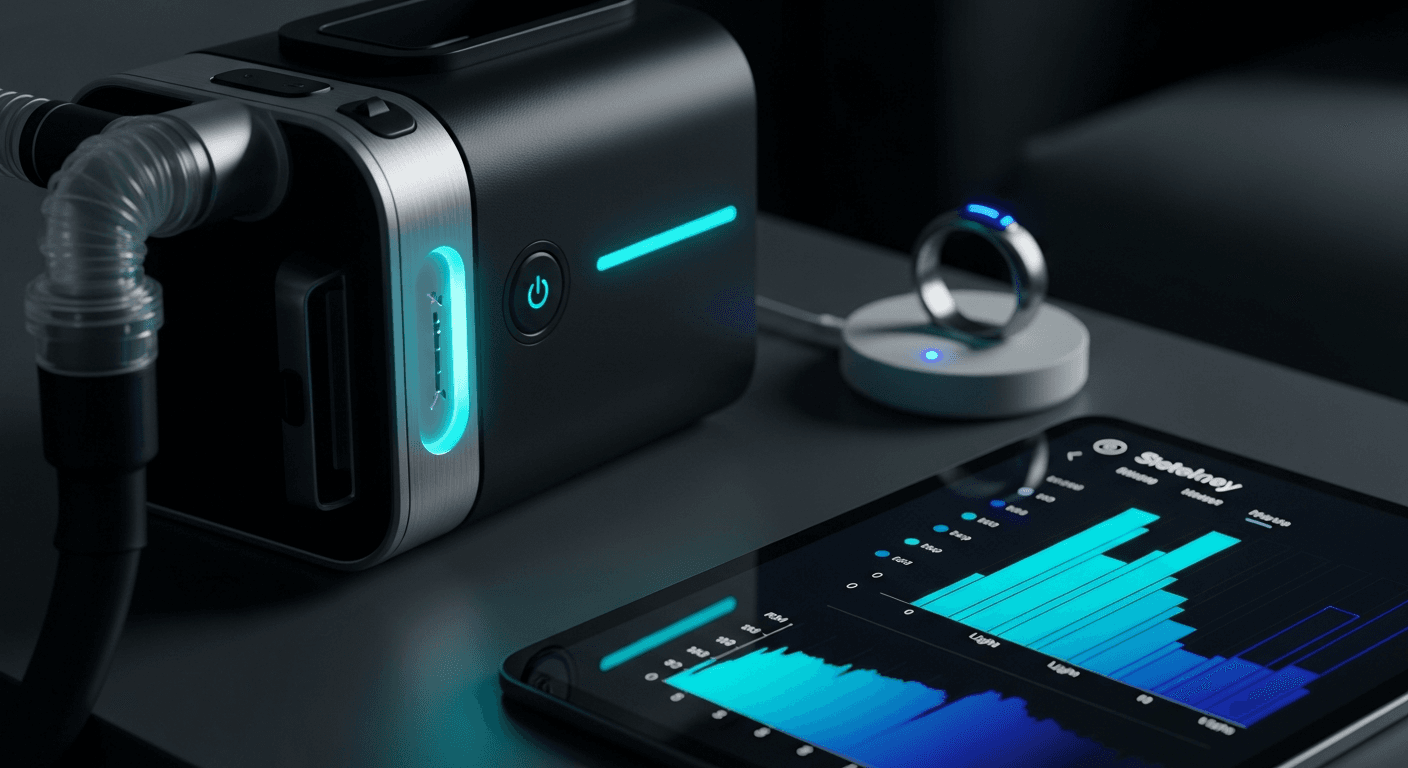
I used to think I slept fine. Sure, I snored a little—"like a purring cat," my partner would say, trying to be polite—but I woke up ready to hit the gym. Or so I thought. It wasn't until I beta-tested the Oura Ring Gen 5's new "respiratory burden" feature back in late 2024 that I saw the red lines. My SpO2 was dipping into the 80s. Every single night.
I wasn't just sleeping. I was suffocating.
If you're reading this, you probably care about your health span. You fast, you take NMN, you cold plunge. But if you have untreated sleep apnea, you are effectively aging yourself at 2x speed every night. It is the single most overlooked factor in the longevity equation.
Today, we're diving deep into the mechanics of how sleep apnea destroys your cellular health, the groundbreaking 2025 research linking it to weight-loss drugs like GLP-1s, and the exact protocol I used to fix my breathing and reverse my biological age.
The Physiology of Suffocation: Why Apnea Kills
Obstructive Sleep Apnea (OSA) isn't just about noise. It's a mechanical failure. Your airway collapses, air stops flowing, and your brain panics. It jolts you awake—micro-arousals that you don't remember—to gasp for air. This happens 15, 30, sometimes 60 times an hour.
The Hypoxic Burden
Every time you stop breathing, your blood oxygen levels drop (intermittent hypoxia). This is not the "good" kind of hypoxia you get from high-altitude training. This is chaotic, stress-inducing hypoxia. It triggers a massive release of cortisol and adrenaline. Your heart rate spikes when it should be at its lowest.
A pivotal 2024 study in Nature Aging demonstrated that this specific pattern of intermittent hypoxia accelerates telomere shortening in immune cells. Essentially, your immune system ages decades in just a few years of untreated apnea.
The Inflammation Cascade
The constant re-oxygenation (when you finally gasp) causes oxidative stress. It's like rusting your blood vessels from the inside out. This leads to endothelial dysfunction—the precursor to atherosclerosis. If you're wondering why your blood pressure won't go down despite your clean diet, look at your airway.
The Data: What We Know in 2026
The landscape of sleep medicine has shifted dramatically in the last two years. We used to think OSA was a disease of the obese and elderly. We were wrong.
The "Skinny" Apnea
Recent data shows a surge in OSA among lean biohackers. Why? Jaw structure. Modern soft diets have led to narrower palates and recessed chins, leaving less room for the tongue. You can have 6% body fat and severe sleep apnea if your airway anatomy is compromised.
The GLP-1 Connection
Perhaps the biggest news in 2025 was the FDA approval of Tirzepatide (Mounjaro/Zepbound) specifically for sleep apnea reduction. The "Precision obesity medicine" review (J Endocrinol Invest, Dec 2025) highlighted that GLP-1 agonists don't just reduce neck fat; they seem to alter the neuromuscular control of the airway. For many, this has been a functional cure without the need for a machine.
Smart Tech Validity
A 2024 study in the Journal of Clinical Sleep Medicine validated the use of consumer wearables (specifically Apple Watch and high-end Garmin models) against polysomnography. The verdict? They are 90% accurate for moderate to severe apnea. You no longer need to sleep in a lab with wires glued to your head to get a diagnosis.
Detection 2.0: Diagnosing Yourself
If you wake up with a dry mouth, morning headaches, or just don't feel "recharged" despite 8 hours in bed, you need data.
- Wearable Screening: Look at your SpO2 variance. If your average oxygen saturation is below 94%, or if you see regular dips below 90%, that is a red flag.
- Audio Analysis: Apps like Sleep Cycle or SnoreLab are crude but effective. If you hear gasping or choking sounds in your recording, that's apnea.
- Home Sleep Test (HST): In 2026, companies like Wesper and WatchPAT provide clinical-grade patches you wear once. They measure peripheral arterial tone (PAT) and give you a true AHI (Apnea-Hypopnea Index) score.
The Treatment Protocol: Beyond the CPAP
So you have apnea. Do you have to wear a "Darth Vader" mask for the rest of your life? Maybe. But maybe not.
1. CPAP: The Gold Standard (Still)
I know, it’s not sexy. But modern CPAP machines (like the ResMed AirSense 12) are whisper-quiet and algorithmically adaptive. They don't just blow air; they predict your breath. If your AHI is over 15, this is the most effective way to protect your heart and brain immediately.
2. Mandibular Advancement Devices (MAD)
These are custom mouthguards that push your lower jaw forward, opening the airway. They work incredibly well for mild to moderate apnea. Note: Do not buy the boil-and-bite ones from Amazon. They will ruin your bite. Go to a sleep dentist.
3. Myofunctional Therapy & "Mewing"
Think of this as physical therapy for your tongue. A 2024 randomized controlled trial (J Prosthodont Res) showed that consistent oropharyngeal exercises reduced AHI by nearly 40% in mild cases. It involves strengthening the tongue so it doesn't collapse backward during sleep.
4. Positional Therapy
If your apnea is worse on your back (supine), stay on your side. High-tech solutions like the Philips NightBalance vibrate when you roll over, training you to side-sleep.
5. The Pharmacologic Route
As mentioned, if you carry extra weight, GLP-1 agonists are now a first-line therapy. Consult your longevity physician.
Alex’s Personal Protocol
Here is what I do to ensure my airway stays open and my oxygen stays high:
- Mouth Tape: I use Hostage Tape every single night. It forces nasal breathing, which naturally increases nitric oxide and improves airway patency. Note: Mouth tape does NOT cure sleep apnea, but it prevents mouth-breathing, which makes apnea worse.
- Nasal Dilators: I use a Mute Nasal Dilator to maximize airflow.
- Side Sleeping: I use a contoured pillow that supports my neck for side sleeping.
- Monitoring: I check my Oura scores daily. If my SpO2 drops, I look at my variables (did I drink alcohol? Did I eat late?).
- Tongue Posture: During the day, I practice "mewing"—keeping the tongue pressed against the roof of the mouth.
FAQ
Q: Can I die in my sleep from this? A: Directly suffocating to death is rare, but the secondary effects—heart attack and stroke during sleep—are real risks. Carrie Fisher (Princess Leia) died from cardiac arrest complicated by sleep apnea.
Q: Does mouth taping cure sleep apnea? A: No. It helps with snoring and filtration, but if your throat collapses (OSA), tape won't stop it. In fact, if you have severe nasal congestion, don't tape without clearing your nose first.
Q: I'm not fat. Can I still have it? A: Absolutely. It's about anatomy. Recessed jaws, large tonsils, or a narrow palate can cause apnea in athletes with 10% body fat.
Q: Will it go away if I lose weight? A: Often, yes. A 10% reduction in body weight can reduce AHI significantly. But for structural apnea (jaw issues), weight loss might not be enough.
The Bottom Line
Sleep is the foundation of longevity. You can't supplement your way out of hypoxia. If you suspect you have breathing issues, test yourself. Fixing my sleep was the single highest-ROI biohack I've ever done. Don't sleep on it.
Alex Chen
MSc Biomedical Engineering, Certified Biohacking Coach
Biomedical engineer and biohacking coach. Focused on evidence-based longevity protocols and wearable technology integration for optimal healthspan.
You might also like
Sleep Optimization for Longevity: The Science of Deep Rest in 2026
Discover science-backed sleep optimization strategies for longevity. Learn how deep sleep and REM cycles slow aging and boost cellular repair.
How to Optimize Your Circadian Rhythm for Maximum Longevity
Learn how to optimize your circadian rhythm for maximum longevity with science-backed strategies including morning light exposure, meal timing, sleep schedule optimization, and evening wind-down rituals.
AI-Powered Sleep Optimization: The Ultimate Longevity Foundation (2026 Guide)
Discover how AI is revolutionizing sleep for longevity in 2026.