The Complete Guide to HRV Training for Longevity
Discover how heart rate variability (HRV) training can optimize your longevity. Learn what HRV is, how to measure it, and evidence-based strategies to improve your HRV naturally through breathing exercises, sleep optimization, and biofeedback.
 Dr. Helena Vasquez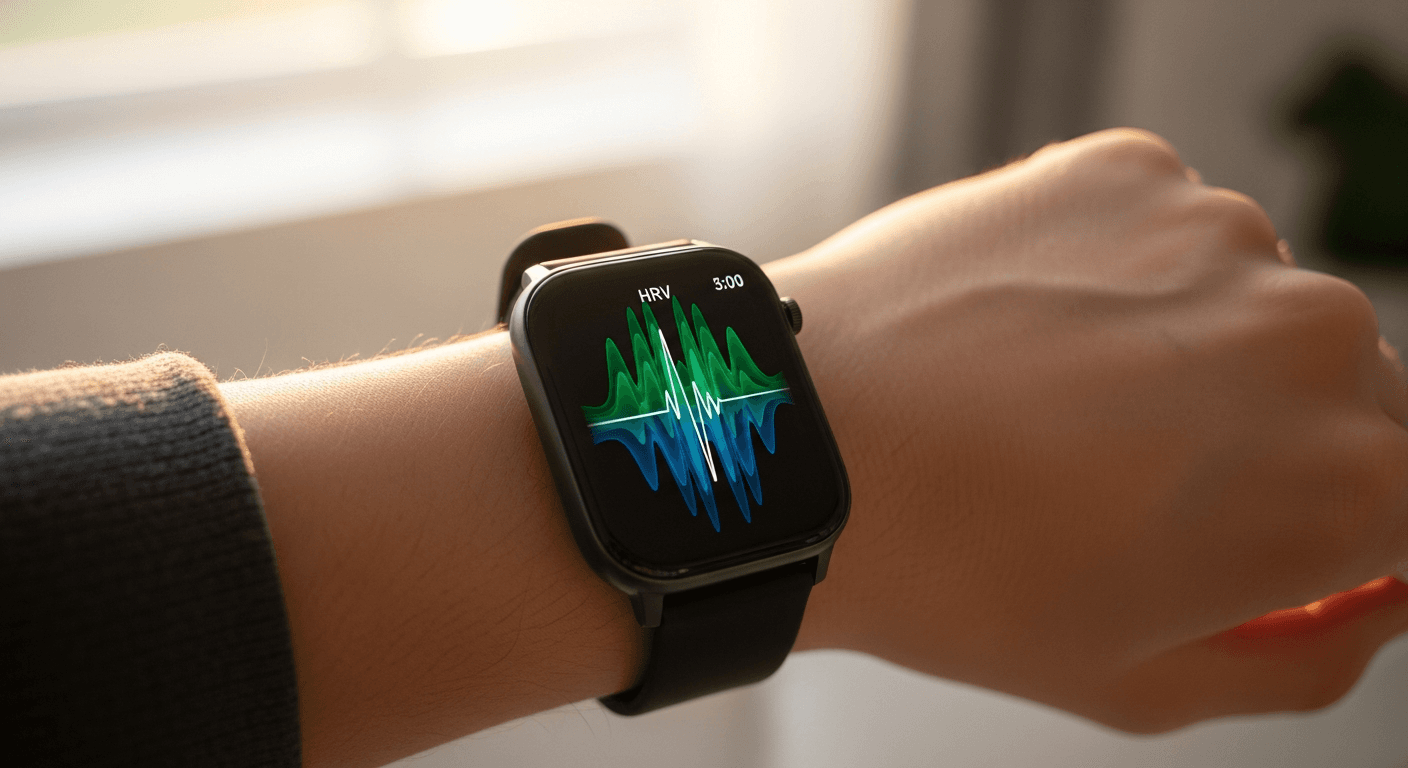
The Complete Guide to HRV Training for Longevity
Heart rate variability (HRV) has emerged as one of the most powerful biomarkers for understanding your body's stress resilience, recovery capacity, and overall longevity potential. Unlike your resting heart rate, which simply counts beats per minute, HRV measures the subtle variations between each heartbeat—and these variations tell a profound story about your autonomic nervous system's health.
In this comprehensive guide, we'll explore everything you need to know about HRV training: what it is, why it matters for longevity, how to measure it accurately, and evidence-based strategies to improve your HRV naturally.
What Is Heart Rate Variability (HRV)?
Heart rate variability refers to the variation in time intervals between consecutive heartbeats. If your heart beats at 60 beats per minute, you might assume there's exactly one second between each beat. In reality, healthy hearts show natural variation—perhaps 0.9 seconds between one beat, 1.1 seconds before the next, and 0.95 seconds after that.
This variability is controlled by your autonomic nervous system (ANS), which has two primary branches:
The Sympathetic Nervous System (SNS)
Often called the "fight or flight" response, the SNS prepares your body for action. When activated, it speeds up your heart rate and reduces variability. Think of it as pressing the gas pedal.
The Parasympathetic Nervous System (PNS)
Known as the "rest and digest" system, the PNS promotes recovery, relaxation, and restoration. When dominant, it slows your heart rate and increases variability. This is your body's brake pedal.
Higher HRV generally indicates a more adaptive, resilient nervous system—one that can efficiently toggle between these two states based on demand. Lower HRV suggests your nervous system is under chronic stress, stuck in "fight or flight" mode, or struggling to recover.
Why HRV Matters for Longevity
The connection between HRV and longevity isn't just theoretical—it's supported by decades of research across multiple domains.
Cardiovascular Health Predictor
A landmark study published in the Journal of the American College of Cardiology found that reduced HRV is an independent predictor of mortality after heart attacks. Individuals with higher HRV showed significantly better long-term outcomes.
Biological Age Marker
Research from the Framingham Heart Study demonstrated that HRV naturally declines with age—but this decline isn't uniform. People with lifestyle factors that support healthy aging maintain higher HRV well into their later years, suggesting HRV reflects biological (rather than chronological) age.
Stress Resilience Indicator
Chronic stress accelerates aging through multiple pathways: inflammation, oxidative stress, telomere shortening, and hormonal dysregulation. HRV provides a real-time window into how well your body handles and recovers from stressors.
Recovery Optimization
Elite athletes and biohackers use HRV to optimize training loads. The same principle applies to longevity: understanding when your body needs rest versus when it's ready for challenge helps prevent the accumulative damage that accelerates aging.
Inflammation Connection
Low HRV correlates with elevated inflammatory markers like C-reactive protein (CRP) and interleukin-6 (IL-6). Since chronic inflammation is a primary driver of age-related disease, monitoring and improving HRV offers an accessible intervention point.
How to Measure Your HRV
Accurate HRV measurement has become remarkably accessible thanks to consumer wearable technology. Here's what you need to know:
Measurement Methods
Chest Strap Heart Rate Monitors
Devices like the Polar H10 remain the gold standard for HRV accuracy. They use electrical signals (ECG-like measurement) to detect each heartbeat with millisecond precision.
Optical Wrist-Based Sensors
Modern smartwatches (Apple Watch, Garmin, Fitbit) use photoplethysmography (PPG) to estimate HRV. While less accurate than chest straps, they're convenient for daily tracking and sufficient for trend analysis.
Dedicated HRV Devices
Products like the Oura Ring, WHOOP band, and Morpheus combine hardware with sophisticated software algorithms to provide comprehensive HRV analysis.
Key HRV Metrics
Different devices report different HRV metrics. Understanding them helps you interpret your data:
RMSSD (Root Mean Square of Successive Differences)
The most commonly reported metric for short-term HRV assessment. Higher values indicate greater parasympathetic activity. Most wearables display this as your "HRV" number in milliseconds.
SDNN (Standard Deviation of NN Intervals)
Reflects overall variability over longer periods (typically 24 hours). Useful for understanding daily patterns but requires continuous monitoring.
HRV Index and Triangular Index
Less common in consumer devices but valuable for clinical assessment.
LF/HF Ratio
The ratio of low-frequency to high-frequency power, sometimes used to assess sympathetic/parasympathetic balance (though interpretation is debated).
Best Practices for Accurate Measurement
Consistency is crucial. Measure at the same time each day—ideally first thing in the morning, before coffee or physical activity. This captures your baseline parasympathetic tone.
Control your position. Lying down yields different values than sitting or standing. Pick one position and stick with it.
Breathing matters. Some protocols use paced breathing; others use natural breathing. Whichever you choose, keep it consistent.
Duration affects accuracy. Minimum measurement times vary by metric: RMSSD needs at least 1-2 minutes for reliable readings, while SDNN requires hours of data.
What's a Good HRV Score?
HRV is highly individual. A "good" score depends on age, fitness level, genetics, and measurement methodology. However, some general guidelines apply:
Age-Adjusted Expectations
- 20-25 years: Average RMSSD of 50-100ms
- 25-35 years: Average RMSSD of 40-80ms
- 35-45 years: Average RMSSD of 35-70ms
- 45-55 years: Average RMSSD of 25-55ms
- 55+ years: Average RMSSD of 20-45ms
The Trend Matters Most
Absolute numbers matter less than personal trends. A consistent HRV of 35ms that suddenly drops to 20ms signals something worth investigating—even if both numbers fall within "normal" ranges.
Morning vs. Night Readings
Nocturnal HRV (measured during sleep) often provides more consistent data than morning spot-checks, as it's less affected by daily variables like coffee timing or morning stress.
How to Improve Your HRV Naturally
Here's where HRV training becomes actionable. These evidence-based strategies can help elevate your HRV and, by extension, your longevity potential.
1. Breathing Exercises and HRV Biofeedback
Controlled breathing is the fastest, most direct way to influence your HRV. The vagus nerve—the primary parasympathetic pathway—responds immediately to specific breathing patterns.
Resonance Frequency Breathing
Research shows that breathing at approximately 5-7 breaths per minute (your personal "resonance frequency") maximizes HRV amplitude. This typically means inhaling for about 4-6 seconds and exhaling for 4-6 seconds.
How to practice:
- Use an HRV biofeedback app (Elite HRV, Heart Math, or similar)
- Start with 5.5 breaths per minute (5.5 seconds in, 5.5 seconds out)
- Adjust slightly to find your personal resonance—you'll notice your HRV values peak at a specific frequency
- Practice for 10-20 minutes daily
Box Breathing
Navy SEALs use this technique for stress resilience:
- Inhale for 4 seconds
- Hold for 4 seconds
- Exhale for 4 seconds
- Hold for 4 seconds
- Repeat
Extended Exhale Breathing
Emphasizing longer exhales activates the parasympathetic response more strongly:
- Inhale for 4 seconds
- Exhale for 6-8 seconds
- Repeat for 5-10 minutes
2. Optimize Your Sleep
Sleep is when your parasympathetic nervous system does its deepest restoration work. Poor sleep quality almost universally correlates with suppressed HRV.
Key sleep optimization strategies:
- Consistent sleep schedule: Going to bed and waking at the same times regulates your circadian rhythm and supports autonomic balance.
- Temperature control: Cooler sleeping environments (65-68°F / 18-20°C) enhance deep sleep stages where HRV restoration peaks.
- Light exposure management: Morning sunlight and evening darkness help synchronize your circadian rhythm.
- Limit alcohol: Even moderate drinking before bed significantly suppresses nocturnal HRV, despite its relaxing subjective effect.
- Avoid eating late: Heavy meals within 3 hours of bedtime elevate metabolic activity and reduce parasympathetic dominance during sleep.
3. Strategic Exercise
Exercise affects HRV in complex ways. Acute exercise temporarily suppresses HRV (sympathetic activation), but chronic aerobic training increases resting HRV over time.
For HRV improvement:
- Aerobic zone 2 training: Low-intensity, steady-state cardio (walking, easy cycling, swimming) performed at 60-70% of max heart rate builds aerobic capacity while enhancing parasympathetic tone. Aim for 150-200 minutes weekly.
- Avoid overtraining: Excessive high-intensity training without adequate recovery chronically suppresses HRV. Use your morning HRV readings to guide training intensity—if HRV is notably lower than your baseline, consider a rest or easy day.
- Incorporate recovery practices: Active recovery (gentle movement, stretching, yoga) on rest days supports parasympathetic rebound.
4. Cold Exposure
Brief cold exposure activates the vagus nerve and, over time, may improve HRV and stress resilience.
Practical approaches:
- End showers with 30-60 seconds of cold water
- Cold plunges (50-59°F / 10-15°C) for 2-5 minutes
- Build exposure gradually—the stress response benefits come from adaptation, not acute shock
5. Nutrition for Autonomic Health
What you eat affects your nervous system function:
- Omega-3 fatty acids: DHA and EPA support vagal tone. Fatty fish (salmon, mackerel, sardines) or quality supplements can help.
- Polyphenols: Compounds in berries, dark chocolate, and green tea have been associated with improved HRV.
- Reduce ultra-processed foods: Inflammatory diets correlate with lower HRV.
- Moderate caffeine: Caffeine temporarily suppresses HRV. If morning measurement is important to you, measure before your first cup.
- Stay hydrated: Dehydration reduces blood volume and strains autonomic regulation.
6. Stress Management Practices
Chronic psychological stress is one of the biggest HRV suppressors. Beyond breathing exercises, consider:
- Meditation: Even 10 minutes of daily mindfulness practice has been shown to increase HRV over weeks to months.
- Time in nature: Forest bathing and outdoor time reduce cortisol and improve autonomic balance.
- Social connection: Positive social relationships support parasympathetic health; loneliness does the opposite.
- Therapy and counseling: Unprocessed trauma and chronic anxiety directly impact autonomic function.
7. Supplements That May Support HRV
While lifestyle interventions should come first, some supplements show promise:
- Magnesium: Supports nervous system relaxation. Many people are deficient.
- Ashwagandha: An adaptogen with research supporting reduced cortisol and potential HRV improvements.
- Omega-3s: As mentioned, EPA/DHA support vagal function.
- Probiotics: The gut-brain-vagus axis means gut health influences HRV.
Always consult a healthcare provider before adding supplements to your routine.
Building Your HRV Training Protocol
Ready to implement what you've learned? Here's a practical 8-week protocol:
Weeks 1-2: Baseline Establishment
- Choose your measurement device and method
- Measure HRV at the same time each morning for 14 days
- Don't try to optimize yet—just gather data
- Note any obvious correlations (poor sleep = lower HRV, etc.)
Weeks 3-4: Foundation Habits
- Begin 10 minutes of daily resonance breathing practice
- Establish consistent sleep and wake times
- Reduce or eliminate alcohol during this phase
- Continue daily HRV tracking
Weeks 5-6: Exercise Optimization
- Add 3-4 sessions of zone 2 aerobic exercise (30-45 minutes each)
- Use HRV to guide intensity—take it easier when readings are depressed
- Incorporate 2-3 cold shower finishes per week
Weeks 7-8: Refinement
- Assess your trends—what interventions show the clearest impact?
- Dial in nutrition strategies (omega-3s, reducing processed foods)
- Consider adding a formal meditation practice
- Evaluate long-term sustainability of your protocols
Common HRV Training Mistakes to Avoid
Obsessing over daily fluctuations. Day-to-day variation is normal. Focus on weekly and monthly trends instead.
Ignoring context. A low HRV after an intense workout or stressful day isn't necessarily bad—it's an appropriate response. Chronic depression of HRV without recovery is concerning.
Over-optimizing sleep metrics. Anxiety about sleep quality can itself suppress HRV. If tracking becomes stressful, take periodic breaks.
Comparing to others. Your HRV is uniquely yours. Someone else's numbers don't determine what's "good" for your body.
Expecting immediate results. Autonomic adaptation takes weeks to months. Be patient with the process.
The Future of HRV Training
As AI and machine learning advance, expect HRV analysis to become increasingly sophisticated. Already, some platforms use multi-day patterns to predict illness onset, optimal performance windows, and recovery needs.
Integration with continuous glucose monitors (CGMs), sleep trackers, and environmental sensors will provide holistic pictures of autonomic health. The goal isn't just a higher HRV number—it's a more resilient, adaptive physiology capable of thriving across decades.
Conclusion
Heart rate variability is more than a fitness metric—it's a window into your autonomic nervous system's health and, by extension, your longevity trajectory. The evidence connecting high HRV to better cardiovascular outcomes, reduced inflammation, and slower biological aging is compelling and growing.
The good news? Unlike many biomarkers, HRV responds readily to lifestyle intervention. Through consistent breathing practice, optimized sleep, strategic exercise, stress management, and supportive nutrition, you can measurably shift your autonomic balance toward greater parasympathetic activity.
Start with measurement, establish your baseline, and introduce changes systematically. Over weeks and months, you'll develop an intuitive understanding of what your body needs—and HRV will serve as your guide on the path to a longer, more resilient life.
This article is for educational purposes only and does not constitute medical advice. Consult with healthcare professionals before making significant changes to your health regimen.

Dr. Helena Vasquez
PhD in Neuroscience, Stanford Research Fellow
Neuroscientist specializing in cognitive longevity and brain optimization. Researcher focused on neurofeedback protocols and nootropic supplementation for extending healthspan.
You might also like

10 Longevity Biohacks You Can Start Today for Under $100
You don't need expensive gadgets or a stack of supplements to hack your longevity. These 10 science-backed biohacks cost little to nothing and can measurably improve your healthspan starting today.

Red Light Therapy Benefits: Does It Actually Work for Anti Aging
After 3 years of daily red light therapy, here's what the science actually says about photobiomodulation for anti-aging, skin collagen, muscle recovery, and mitochondrial health -- plus honest device reviews.

Sauna Benefits for Longevity: Why Heat Stress Is Your Secret Weapon Against Aging
Regular sauna use reduces all-cause mortality by 40% and extends lifespan through heat shock proteins, cardiovascular conditioning, and hormesis. Here's the science and how to implement it.